


inFORM – Dynamic Shape Display (concept preview) 


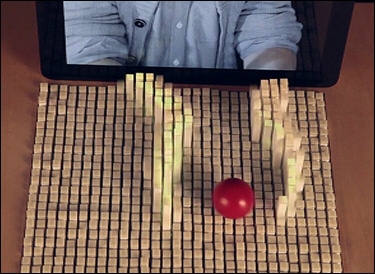
inFORM is a Dynamic Shape Display which can display 3D content physically, so that users can not only see the digital information but can also interact with it in a tangible way. Not only that – inFORM itself can also physically interact with the material world around it, for example moving objects around on a table’s surface.
The device consists of a ‘table’, which is broken down to a chequerboard of square-profiled rods. Each rod represents a pixel of the 3D ‘image’. In the stand under the table is hidden a digital-to-mechanical converter, which translates any digital information sent to the device to a proportional movement (elevation) of the respective rod. In the initial position, all the rods are pulled into the stand, so that the user sees only the flat surface of the table. When a 3D image is being displayed, respective rods corresponding to individual pixels of the 3D image are pushed out from the surface of the table to different elevations (or pulled into the surface for concave objects), creating the physical, tangible representation of the object being displayed.
Tangible Media Group at MIT Media Lab, which developed the concept, is currently exploring a number of possible applications for the inFORM shape display. One area they are working on is geographical and architectural data, such as geographical maps, terrain models and architectural models. Urban planners and architects could thus view their 3D designs physically, which would help them better understand, share and discuss their projects.
Similarly, commercial designers could actually see and interact with the physical representations of their work. For example a commercial designer working for a vehicle manufacturer can physically display a 3D image of a prototype of a new car, discuss it with others and do any desired adjustments before building the actual prototype, potentially saving lot of time, material and money in the development process.
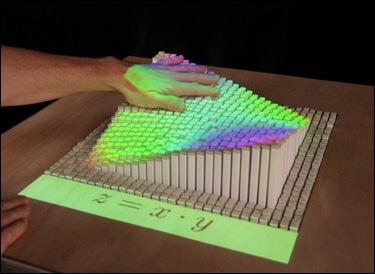
Displaying 3D graphs is another application that immediately springs in mind.
There are also other possible applications. Remote participants in a video conference can interact physically with objects at a distance, allowing for a much stronger sense of presence than mere displaying of the participant on a flat screen display. Tangible Media Group’s web site demonstrates a simple example of such usage in a video where someone uses conceptual prototype of inFORM to remotely interact with a ball, but you can easily envisage a CEO of a company giving a remote presentation of a new product, e.g. a mobile phone, to a boardroom full of people, where he actually physically interacts with the real mobile, lifts it from the table, turns it around and points out its new features. This all while he is in New York and his audience is thousands miles away in London.
Tangible Media Group even envisages a more advanced (and presumably bigger) model, where the whole body of a remote participant in a video conference would be displayed physically – eat your heart out Princess Leia with your puny hologram!
19/02/2014
